

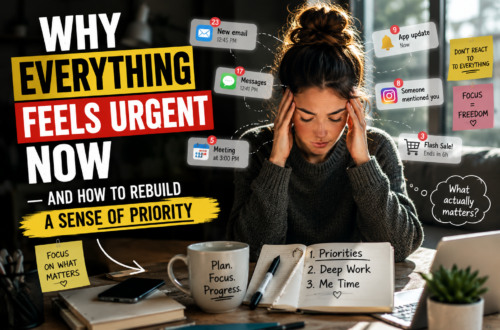
For many people, exhaustion no longer comes from physical labor alone. It comes from constant mental stimulation. Even on days when little physical effort is required, the mind rarely gets a chance to rest. Notifications, information, conversations, screens, deadlines, and endless digital input create a level of mental pressure that previous generations never experienced in the same way.
The strange part is that modern life was supposed to become easier. Technology promised convenience, speed, and efficiency. In many ways, it delivered exactly that. Tasks that once took hours can now be completed in minutes. Communication is instant, information is unlimited, and entertainment is available at any moment.
Yet despite all these advantages, many people feel more overwhelmed than ever.
One reason is that the human brain was never designed to process this amount of information continuously. Every notification, message, video, article, and decision consumes mental energy. Even when these actions feel small individually, they accumulate throughout the day. The brain remains in a constant state of stimulation, rarely entering true recovery mode.
Another major factor is the disappearance of mental boundaries.
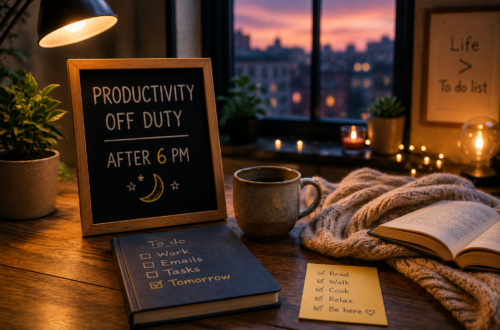
In the past, work and personal life were more separated. Leaving work often meant mentally disconnecting from it. Today, phones and laptops have erased those boundaries. Emails follow people home. Social media creates endless comparison. Productivity culture encourages people to optimize every moment of their lives, turning even rest into another task to manage.
As a result, many people are technically resting but never truly recovering.
The constant pressure to stay updated also contributes to mental fatigue. News cycles move faster than ever, trends change overnight, and online culture rewards speed instead of reflection. People often consume large amounts of information without giving themselves enough time to process any of it deeply. This creates a feeling of mental clutter — a sense that the mind is full but not clear.
Another overlooked issue is decision fatigue.
Modern life requires an endless number of daily decisions. What to watch, what to buy, what to respond to, what to prioritize, what to ignore. Even simple choices consume cognitive energy. By the end of the day, the brain becomes less efficient, making it harder to focus, think creatively, or make meaningful decisions.
Social media amplifies this problem further.
Platforms are specifically designed to capture attention for as long as possible. Infinite scrolling, short-form content, and constant stimulation train the brain to seek novelty instead of depth. Over time, this weakens attention span and makes slower, more focused activities feel difficult. Many people now struggle to read long articles, sit quietly, or work deeply without checking their phones.
Sleep quality has also been affected by modern habits. Exposure to screens late at night, constant mental stimulation, and irregular routines interfere with the brain’s natural recovery processes. Even when people sleep for enough hours, they often wake up mentally tired because the quality of rest has decreased.
Perhaps the most important issue is that modern life rarely allows silence.
There is almost always something playing in the background — music, videos, podcasts, notifications, or conversations. While entertainment itself is not harmful, the absence of quiet moments prevents the brain from slowing down. Reflection, creativity, and emotional recovery often emerge during periods of stillness, yet many people unintentionally avoid them.
The solution is not to reject technology completely. Modern tools can be incredibly useful when used intentionally. The real challenge is learning how to create balance in a world designed to constantly compete for attention.
This may involve reducing unnecessary digital input, creating boundaries between work and rest, limiting distractions, or simply spending more time offline. Small changes can have a surprisingly powerful effect on mental clarity and energy.
Ultimately, exhaustion is not always caused by doing too much physically. Sometimes it comes from never allowing the mind to fully stop.
In a world that constantly demands attention, protecting your mental space has become one of the most important forms of self-preservation.


Great content! Keep up the good work!
Thank you so much! I’m really glad you enjoyed it. More useful content is coming soon 😊