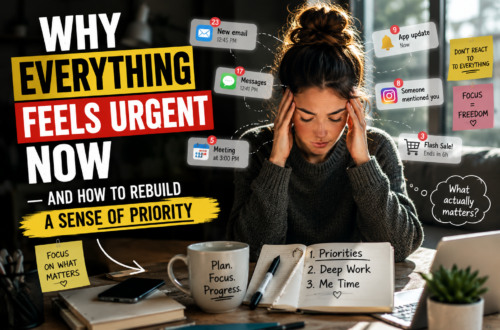

In today’s fast-paced digital world, being busy has become a badge of honor. People constantly talk about how full their schedules are, how many tasks they have to complete, and how little time they have left. But despite this constant activity, many still feel like they are not making real progress. Days pass, tasks get done, yet the most important goals remain untouched. This is where the difference between being busy and being productive becomes critical.
The truth is, being busy does not mean being effective. In fact, excessive busyness often hides a lack of clarity and direction. When your day is filled with small, low-impact tasks, it creates the illusion of productivity while preventing you from focusing on what truly matters. You might answer emails, scroll through messages, attend unnecessary meetings, or switch between tasks all day long. By the end of the day, you feel exhausted, but not fulfilled.
One of the main reasons behind this problem is the absence of clear priorities. Without a defined goal, your brain naturally gravitates toward easy and immediate tasks instead of meaningful work. This is why you often start your day with good intentions but end up doing things that were not planned. The solution begins with identifying what truly matters. Instead of creating long to-do lists, focus on selecting two or three high-impact tasks that will move your life or work forward.
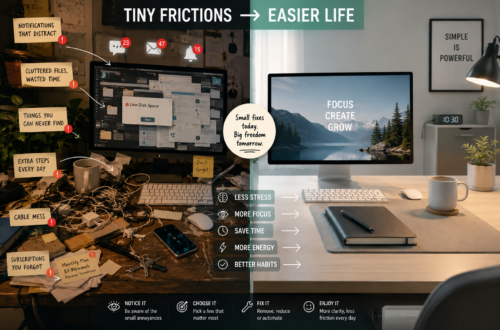
Another major issue is constant distraction. Modern environments are designed to interrupt your attention. Notifications, social media, emails, and even people around you compete for your focus. Each interruption may seem small, but together they destroy your ability to concentrate deeply. Productivity is not about doing more things; it is about protecting your focus long enough to complete meaningful work. Learning to eliminate or reduce distractions is one of the most powerful skills you can develop.
Time management is also often misunderstood. Many people believe that productivity comes from filling every minute of their schedule. In reality, the opposite is true. Productivity comes from intentional work, not constant work. Taking breaks, creating space between tasks, and allowing your brain to recover are essential for maintaining high performance. Without rest, your energy drops, your focus weakens, and your work quality decreases.
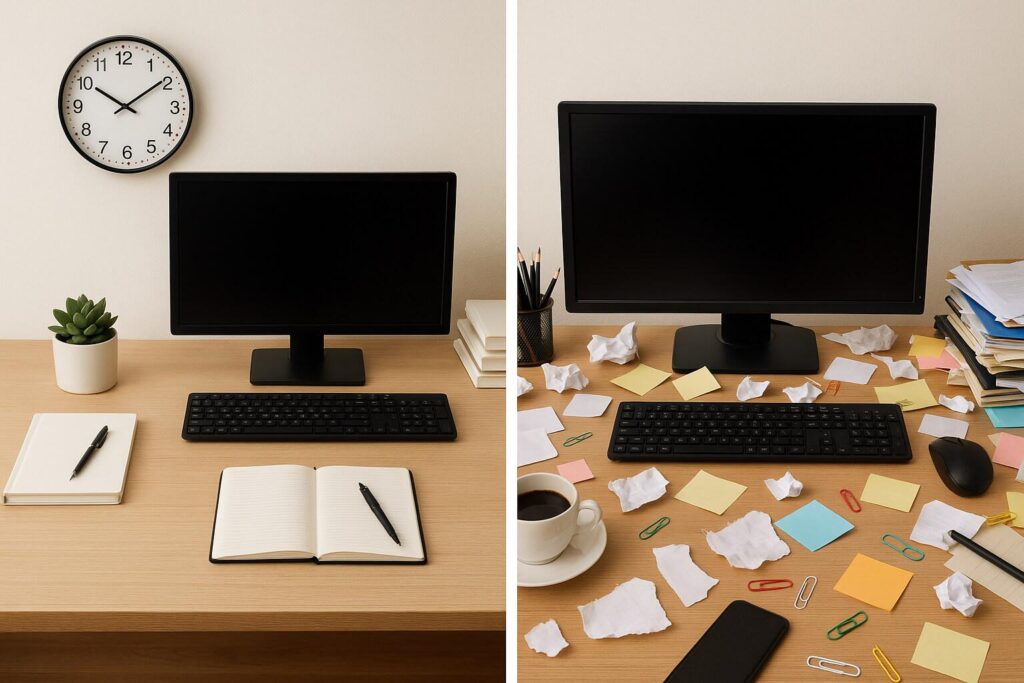
Another hidden factor is mental clutter. When your mind is overloaded with ideas, reminders, and unfinished tasks, it becomes difficult to think clearly. This is why writing things down is so effective. By externalizing your thoughts, you free your mind to focus on execution rather than remembering everything. Simple habits like journaling or planning your day the night before can significantly improve your clarity and efficiency.
It is also important to understand that productivity is deeply connected to energy, not just time. You can have a perfectly organized schedule, but if your energy is low, you will struggle to perform. Sleep, nutrition, and physical movement play a crucial role in how productive you are throughout the day. Ignoring these fundamentals leads to burnout and inconsistency.
Ultimately, productivity is not about working harder or longer. It is about making better decisions about how you use your time, attention, and energy. When you shift your focus from “doing more” to “doing what matters,” everything changes. You start seeing real progress, you feel more in control, and your work becomes more meaningful.
If you feel like you are constantly busy but not truly productive, it is not a personal failure. It is a system problem. The good news is that systems can be changed. By setting clear priorities, reducing distractions, managing your energy, and simplifying your workflow, you can transform the way you work and live.
True productivity is not about filling your day. It is about making your day count.