

Reducing Distractions: The Immediate Impact

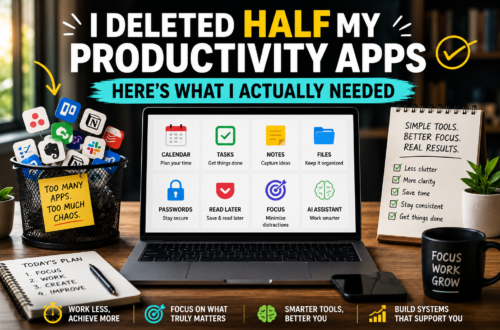
The first real change came when I introduced a simple distraction-blocking tool. I decided to block access to social media and other time-wasting websites during work sessions. At first, this felt restrictive, almost uncomfortable, as if something was missing. But after a short period, that feeling disappeared and was replaced by something unexpected: clarity. Without constant interruptions, I was finally able to stay on a task long enough to make real progress. The mental noise was reduced significantly, and I no longer had to fight against distractions every few minutes. What surprised me most was how quickly this single change improved my productivity. It didn’t require motivation or discipline — it simply removed the temptation.
Using AI to Simplify Thinking
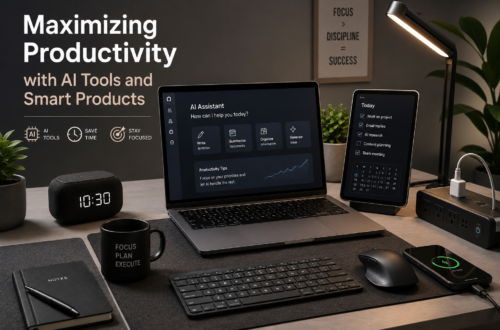
A few days into the experiment, I started using ChatGPT in a way I hadn’t considered before. Instead of using it only for information or writing, I used it to organize my thoughts. Whenever I felt overwhelmed, I would describe my tasks and ask the AI to structure them into a clear plan. This simple action removed a significant amount of mental friction. Instead of spending time deciding what to do next, I could immediately start working. It felt like having a personal assistant that helped me cut through confusion and move directly into execution. Over time, this not only saved time but also reduced stress.
Structuring Work for Better Focus
Another major improvement came from organizing my tasks using Notion AI. Before this, my ideas and responsibilities were scattered across different apps and notes, creating constant mental clutter. By centralizing everything in one place and using AI to structure it, I created a system that was both simple and effective. This change had a subtle but powerful effect. When everything is clearly organized, your brain no longer wastes energy trying to remember or prioritize tasks. Instead, it can focus entirely on execution. This is where real productivity begins.
The Result After 7 Days
After one week, the change was undeniable. I was not only getting more work done, but I was doing it with less effort and less stress. The constant feeling of being overwhelmed had disappeared, replaced by a sense of control and clarity. In terms of measurable results, I was able to recover over an hour of focused work time per day, simply by removing distractions and improving how I approached tasks. More importantly, I felt mentally lighter, which made it easier to stay consistent.
🎯 What Actually Works
Looking back, the most effective changes were surprisingly simple. Blocking distractions had the fastest impact, while structuring tasks with AI created long-term clarity. The combination of these elements formed a system that supported focus naturally, without requiring constant effort. What did not work was relying on willpower alone. Without the right environment and tools, maintaining focus becomes unnecessarily difficult.
Final Thought
Focus is often misunderstood as a personal trait, something you either have or don’t. But in reality, it is largely a result of your environment and the systems you use. When you remove distractions and simplify your workflow, focus becomes much easier to achieve.
Conclusion
You don’t need to work harder to become more productive. In many cases, you simply need to remove what is slowing you down. By using the right tools and creating a structured environment, you can dramatically improve your ability to focus without relying on motivation.
🔥 Call To Action
Start small. Remove one distraction today, and introduce one tool that simplifies your workflow. Over time, these small changes will create a system that allows you to work with clarity, consistency, and control.